

Introduction
Crotalaria spectabilis Roth, commonly known as Yellow Crotalaria, is an important annual leguminous plant belonging to the family Fabaceae. The species is widely cultivated and naturalized in tropical and subtropical regions due to its rapid growth, high biomass production, and ability to improve soil fertility. In modern agriculture, Crotalaria spectabilis is primarily valued as a green manure and cover crop, contributing to sustainable and eco-friendly farming systems.

Taxonomic Classification
-
Botanical name: Crotalaria spectabilis Roth
-
Common name: Yellow Crotalaria
-
Genus: Crotalaria
-
Family: Fabaceae (Leguminosae)
The genus Crotalaria includes more than 600 species, many of which are known for their nitrogen-fixing ability and distinctive seed pods that produce a rattling sound when dry.
Botanical Description
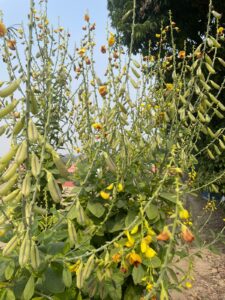
Crotalaria spectabilis is an erect, fast-growing annual herb, usually attaining a height of 1–2 meters. The plant develops a strong taproot system with several lateral roots, which helps in nutrient uptake and soil stabilization.
Morphological Features
-
Leaves: Simple, alternate, ovate to oblong in shape, with smooth margins and a soft texture
-
Stem: Green, cylindrical, and slightly pubescent in young stages
-
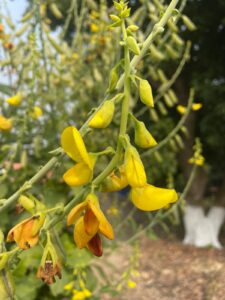
Flowers: Bright yellow, papilionaceous, arranged in terminal or axillary racemes
-
Fruits: Inflated, oblong pods that turn brown on maturity and produce a rattling sound when shaken
-
Seeds: Hard-coated, dark brown to black, capable of remaining viable in soil for long periods
The bright yellow flowers make the plant easily identifiable during the flowering stage.
Distribution and Habitat
Originally native to South America, Crotalaria spectabilis is now widely distributed across India, Southeast Asia, Africa, and Australia. It grows well in warm and humid climates and adapts to a wide range of soils, including sandy loam and lateritic soils. However, it performs best in well-drained soils with moderate fertility.
Agricultural Importance
1. Green Manuring and Nitrogen Fixation
As a member of the Fabaceae family, Yellow Crotalaria forms a symbiotic relationship with Rhizobium bacteria, enabling biological nitrogen fixation. When incorporated into the soil at the flowering stage, it adds substantial organic matter and improves soil nitrogen availability for subsequent crops.
2. Soil Health Improvement
The incorporation of Crotalaria spectabilis enhances:
-
Soil structure and aeration
-
Microbial activity
-
Water-holding capacity
-
Long-term soil fertility
These properties make it a valuable component of crop rotation and organic farming systems.
3. Weed and Erosion Control
Rapid canopy formation helps suppress weeds by reducing light penetration to the soil surface. Its extensive root system also reduces soil erosion, particularly in rainfed and sloping lands.
Toxicity and Safety Considerations
Despite its agricultural benefits, Crotalaria spectabilis contains pyrrolizidine alkaloids, which are toxic to livestock and humans if consumed. Therefore:
-
It should not be used as fodder
-
Grazing should be avoided in fields where the crop is grown
-
Proper awareness is essential when introducing the crop into farming systems
Role in Sustainable Agriculture
In the context of climate-smart and sustainable agriculture, Yellow Crotalaria is increasingly recommended as:
-
A low-cost green manure crop
-
A tool to reduce dependence on chemical fertilizers
-
A soil-restorative crop in degraded lands
Its ability to produce high biomass with minimal inputs makes it suitable for small and marginal farmers.
Conclusion
Crotalaria spectabilis Roth is a multipurpose leguminous crop with significant value in soil fertility management and sustainable farming. While its toxic nature limits its use as fodder, its benefits as a green manure, cover crop, and soil health enhancer are well established. With proper management and awareness, Yellow Crotalaria can play a crucial role in promoting environmentally sustainable agricultural practices.


