

Introduction
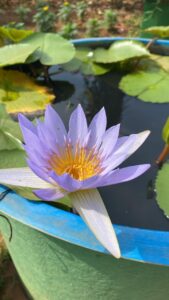
Nymphaea nouchali Burm.f., commonly known as the Blue Water Lily, is a graceful aquatic flowering plant belonging to the family Nymphaeaceae. Widely distributed across South and Southeast Asia, this species is celebrated for its striking blue to bluish-violet flowers and floating leaves. Classified as LC (Least Concern) under conservation status, Nymphaea nouchali plays an important role in freshwater ecosystems, ornamental horticulture, and cultural traditions.

Taxonomic Classification
-
Botanical name: Nymphaea nouchali Burm.f.
-
Common name: Blue Water Lily
-
Genus: Nymphaea
-
Family: Nymphaeaceae
-
Conservation status: Least Concern (LC)
The genus Nymphaea comprises several species of water lilies distributed worldwide, known for their ecological importance and ornamental beauty.
Botanical Description
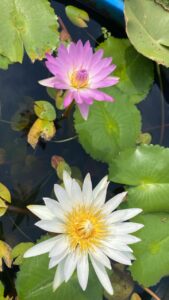
Nymphaea nouchali is a perennial, rooted aquatic herb adapted to still or slow-moving freshwater bodies such as ponds, lakes, tanks, and wetlands.
Morphological Characteristics
-
Rhizome: Thick, horizontal, and submerged in the muddy bottom
-
Leaves: Large, round to ovate, floating leaves with a waxy surface; margins entire to slightly wavy
-
Petiole: Long, flexible, allowing leaves to float on the water surface
-
Flowers: Solitary, showy, blue to bluish-purple with a yellow center; borne on long stalks
-
Reproductive parts: Numerous stamens and carpels arranged spirally
-
Fruit: Spongy berry-like structure containing many seeds
The flowers usually open in the morning and close by afternoon, a characteristic feature of many Nymphaea species.

Distribution and Habitat
Nymphaea nouchali is widely distributed in India, Sri Lanka, Bangladesh, Nepal, Myanmar, Thailand, and parts of Southeast Asia. It thrives in:
-
Freshwater ponds and lakes
-
Shallow wetlands
-
Irrigation tanks and reservoirs
The plant prefers full sunlight, warm temperatures, and nutrient-rich, muddy substrates.
Ecological Importance
The Blue Water Lily plays a vital role in aquatic ecosystems:
-
Provides shelter for fish, amphibians, and aquatic invertebrates
-
Reduces water temperature by shading the surface
-
Enhances oxygen balance and nutrient cycling
-
Acts as a bioindicator of freshwater ecosystem health
Its floating leaves help minimize algal overgrowth by limiting excessive light penetration.
Ornamental and Cultural Value
Nymphaea nouchali is widely cultivated as an ornamental aquatic plant in garden ponds, botanical gardens, and water landscapes due to its elegant flowers and foliage.
Cultural and Religious Significance
-
The Blue Water Lily holds symbolic importance in Indian and Sri Lankan culture, often associated with purity, enlightenment, and beauty
-
It is depicted in traditional art, temple carvings, and literature
-
In some regions, it is used in religious offerings and rituals
Medicinal and Ethnobotanical Uses
In traditional systems of medicine, various parts of Nymphaea nouchali have been used for:
-
Cooling and anti-inflammatory preparations
-
Treatment of digestive and urinary disorders
-
Management of fever and skin ailments
However, such uses should be based on traditional knowledge and scientific validation.
Physiological Adaptations
The physiology of Nymphaea nouchali is highly specialized for survival in freshwater aquatic environments. The plant exhibits efficient hydrophytic adaptations, with extensive development of aerenchyma tissue in leaves, petioles, and rhizomes, which facilitates internal oxygen diffusion from aerial parts to submerged organs. Photosynthesis occurs primarily in the floating leaves, where stomata are restricted to the upper epidermis, preventing water entry while allowing effective gas exchange. The waxy cuticle on the leaf surface enhances buoyancy and reduces microbial colonization. Nymphaea nouchali demonstrates a high capacity for light utilization at low irradiance, enabling sustained photosynthetic activity even under partial shading. Nutrient uptake occurs mainly through the rhizome and roots anchored in nutrient-rich sediments, while excess carbohydrates are stored in the rhizome to support rapid leaf and flower emergence. The plant also shows strong diurnal rhythmicity in flower opening and closing, regulated by light and temperature, which optimizes pollination efficiency. Collectively, these physiological traits allow Nymphaea nouchali to maintain growth, reproduction, and ecological stability in stagnant or slow-moving aquatic habitats.
Conservation Status and Management
Being categorized as Least Concern (LC), Nymphaea nouchali is not currently under major threat. However, habitat degradation, water pollution, and wetland drainage can locally affect its populations. Conservation of natural wetlands and sustainable water management are essential for its long-term survival.

Conclusion
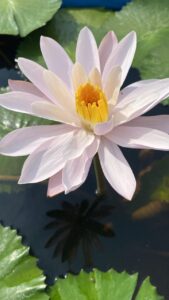
Nymphaea nouchali Burm.f., the Blue Water Lily, is a biologically and culturally significant aquatic plant with immense ecological, ornamental, and traditional value. Its elegant flowers, ecological functions, and adaptive physiology make it an integral component of freshwater ecosystems. Protection of wetlands and responsible cultivation will ensure that this iconic species continues to thrive in natural and managed landscapes.


