

Thysanolaena latifolia (Roxb. ex Hornem.) Honda, popularly known as Tiger grass, is a tall perennial grass species belonging to the family Poaceae. Widely distributed across South and Southeast Asia, this grass is valued not only for its ecological role but also for its strong link with traditional livelihoods. In hilly and forest-adjacent regions, it represents a perfect example of how wild grasses can integrate ecology, economy, and culture.
Taxonomy and Distribution
Thysanolaena latifolia is the only species in the genus Thysanolaena. It is naturally found in tropical and subtropical regions of India, Nepal, Bhutan, Myanmar, Thailand, and parts of southern China. The plant commonly grows along forest margins, hill slopes, open clearings, and disturbed lands, where it forms dense clumps that stabilize soil and reduce erosion.

Botanical Description
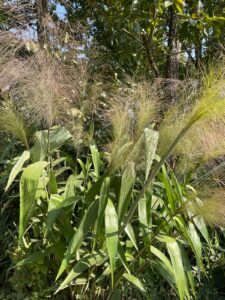
Tiger grass is a robust, tufted perennial grass that can reach heights of 2–4 meters. The leaves are long, broad, and lanceolate, with a prominent midrib and rough margins. The culms are erect and strong, providing mechanical support even under heavy rainfall and wind.
The most economically important part of the plant is its large, open panicle inflorescence, which emerges during the flowering season. These inflorescences are long-lasting, fibrous, and flexible, making them ideal for broom manufacturing. Flowering usually occurs from late monsoon to early winter, depending on local climate.
Physiological and Ecological Importance
From a physiological perspective, Thysanolaena latifolia shows high photosynthetic efficiency and strong adaptability to low-input environments. Its extensive fibrous root system enhances soil binding and improves slope stability, particularly in fragile hill ecosystems.
Ecologically, Tiger grass contributes to:
-
Prevention of soil erosion
-
Improvement of soil organic matter
-
Restoration of degraded lands
-
Support of microhabitats for insects and small fauna
Its perennial growth habit ensures year-round ground cover, which is crucial in regions prone to landslides and heavy rainfall.
Cultivation and Management
Although often harvested from the wild, Tiger grass is increasingly being cultivated under semi-managed systems. It thrives in:
-
Warm tropical to subtropical climates
-
Well-drained loamy to sandy soils
-
Rainfed conditions with moderate fertility
Propagation is usually done through root slips or clump division. Once established, the plant requires minimal maintenance and can remain productive for several years. Harvesting of inflorescences is typically done manually, ensuring sustainability without damaging the plant base.
Economic and Livelihood Value
Tiger grass plays a significant role in rural and tribal economies, especially in northeastern and eastern India. The dried inflorescences are traditionally used to make handcrafted brooms, which are biodegradable, durable, and eco-friendly.
For many households, broom grass provides:
-
Seasonal employment
-
Supplementary income
-
Opportunities for women-led cottage industries
Because of its low input requirements and assured market demand, it is considered a promising species for agroforestry and livelihood diversification.
Environmental and Sustainable Uses
In the context of sustainable agriculture and climate resilience, Thysanolaena latifolia is gaining attention as a nature-based solution. Its role in land rehabilitation, combined with economic returns, makes it suitable for watershed management, slope stabilization, and buffer plantations.
Conclusion
Thysanolaena latifolia stands out as a grass species that bridges the gap between ecology and economy. With its resilience, multifunctionality, and cultural relevance, Tiger grass exemplifies how native grasses can support sustainable development while conserving natural ecosystems.


