

Brugmansia × candida Pers., commonly known as Angel’s Trumpet, is one of the most enchanting ornamental plants grown in tropical and subtropical regions. Belonging to the family Solanaceae, this hybrid species is celebrated for its large, pendulous, trumpet-shaped flowers and intoxicating fragrance, especially noticeable during the evening and night. With its dramatic appearance and strong sensory appeal, Angel’s Trumpet has earned a special place in gardens, landscapes, and botanical collections worldwide.
Origin and Taxonomic Background
Brugmansia × candida is a hybrid species, believed to have originated from crosses among South American Brugmansia species. Native to the Andean regions, plants of this genus have been cultivated for centuries for ornamental, cultural, and ethnobotanical purposes.
The genus Brugmansia was once grouped under Datura, but it is now clearly distinguished by its woody habit and downward-hanging flowers, unlike the upright flowers of Datura. As a member of Solanaceae, Angel’s Trumpet shares lineage with plants like tomato, potato, and tobacco, though it is grown exclusively for ornamental value.
Botanical Description
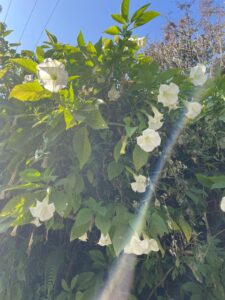
Angel’s Trumpet is a fast-growing shrub or small tree, often reaching 2–4 meters in height under favorable conditions. The plant has a soft-wooded stem, broad ovate leaves, and a spreading canopy that gives it a lush, tropical appearance.
The flowers are the most striking feature:
-
Large, pendulous trumpets, often 20–30 cm long
-
Colors range from white and cream to pale yellow and peach
-
Intensely fragrant at night, attracting nocturnal pollinators
Flowering may occur multiple times a year, especially in warm climates with adequate nutrition and moisture.

Physiology and Flowering Behavior
From a plant physiological perspective, Brugmansia × candida is notable for its strong vegetative vigor and high metabolic activity. The plant allocates substantial resources to flower production, which explains the large size and repeated flowering cycles.
The evening fragrance is linked to:
-
Increased volatile organic compound (VOC) emission at night
-
Adaptation to attract moths and nocturnal insects
-
Circadian regulation of scent-producing pathways
The plant thrives under high light conditions, which support carbohydrate accumulation necessary for sustained flowering.
Cultivation and Care Requirements
Despite its exotic appearance, Angel’s Trumpet is relatively easy to grow with basic care.
Ideal Growing Conditions
-
Climate: Tropical and subtropical; frost-sensitive
-
Light: Full sun to partial shade
-
Soil: Fertile, well-drained soil rich in organic matter
-
Water: Regular watering; does not tolerate prolonged drought
-
Propagation: Stem cuttings are the most common and reliable method
Regular pruning encourages branching and promotes more flowering points. Because of its rapid growth, the plant responds well to balanced fertilization.
⚠️ Important note: All parts of Brugmansia contain tropane alkaloids and are toxic if ingested. Gloves are recommended during pruning and handling.
Landscape and Ornamental Value
Angel’s Trumpet is widely used as:
-
A specimen plant in gardens
-
A focal point in tropical landscapes
-
A container plant for patios and courtyards
Its hanging flowers and evening fragrance make it particularly suitable for night gardens, where sensory appeal extends beyond visual beauty. When in bloom, the plant often becomes the centerpiece of any landscape.
Cultural and Ethnobotanical Aspects
Historically, Brugmansia species have been associated with traditional rituals in parts of South America. While these cultural uses are well documented, modern horticulture emphasizes the plant’s ornamental and aesthetic importance rather than medicinal applications, due to its toxicity.
Why Angel’s Trumpet Remains Popular
In contemporary gardening, Brugmansia × candida represents the fusion of dramatic floral architecture, fragrance, and rapid growth. Its ability to transform a space—especially during evening hours—makes it a favorite among ornamental gardeners and landscape designers.
For plant lovers, Angel’s Trumpet is not merely a flowering shrub; it is an experience. With proper care and responsible handling, this spectacular member of the Solanaceae family continues to captivate gardens with elegance, mystery, and unforgettable fragrance.


