Introduction
Campsis grandiflora (Thunb.) K. Schum., commonly known as the Chinese trumpet-creeper, is a spectacular flowering climber belonging to the family Bignoniaceae. Renowned for its large, showy, trumpet-shaped flowers, this ornamental vine is widely cultivated in gardens, parks, pergolas, and boundary walls. Native to East Asia, particularly China and Japan, Campsis grandiflora is valued for its aesthetic appeal, vigorous growth, and adaptability to warm climates.
Taxonomic Classification
-
Botanical name: Campsis grandiflora (Thunb.) K. Schum.
-
Common name: Chinese trumpet-creeper
-
Genus: Campsis
-
Family: Bignoniaceae
The genus Campsis consists of woody climbers known for their ornamental flowers and strong climbing habit, commonly used in landscape design.
Botanical Description
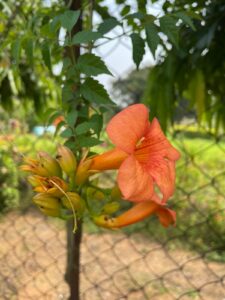
Campsis grandiflora is a deciduous, woody climber that can grow up to 8–10 meters when provided with adequate support. It climbs using aerial rootlets and twining stems, making it ideal for trellises, arches, and walls.
Morphological Characteristics
-
Stem: Woody, vigorous, and climbing in nature
-
Leaves: Opposite, pinnately compound with 7–9 ovate to elliptic leaflets; margins slightly serrated
-
Flowers: Large, trumpet-shaped, orange to reddish-orange flowers borne in terminal clusters
-
Calyx and Corolla: Calyx tubular; corolla flared and showy, attracting pollinators
-
Fruits: Long, flattened capsules containing numerous winged seeds
-
Seeds: Light, papery, and easily dispersed by wind
Flowering generally occurs during summer to early autumn, creating a striking visual display.
Distribution and Habitat
Campsis grandiflora is native to China and Japan but is now cultivated in many parts of the world, including India, due to its ornamental value. It thrives in subtropical to warm temperate climates and prefers:
-
Full sunlight to partial shade
-
Well-drained, fertile soils
-
Moderate watering
The plant shows good tolerance to heat and urban pollution, making it suitable for urban landscaping.
Ornamental and Landscaping Importance
1. Aesthetic Value
The large, brightly colored trumpet-shaped flowers make Campsis grandiflora a popular choice for:
-
Home gardens
-
Public parks
-
Institutional landscapes
-
Pergolas, fences, and arches
Its lush foliage combined with prolific flowering enhances visual appeal.
2. Vertical Gardening
Due to its climbing habit, Chinese trumpet-creeper is ideal for vertical gardening, helping to:
-
Cover unsightly walls
-
Provide natural shading
-
Improve microclimate around buildings
Ecological Importance
The vibrant flowers of Campsis grandiflora attract bees, butterflies, and other pollinators, contributing to urban biodiversity. The plant also provides shelter to small birds and insects, supporting local ecosystems.
Propagation and Maintenance
Campsis grandiflora can be propagated through:
-
Seeds
-
Semi-hardwood cuttings
-
Layering
Regular pruning is recommended to:
-
Control excessive growth
-
Promote better flowering
-
Maintain desired shape
The plant is relatively resistant to pests and diseases, making it low-maintenance once established.
Medicinal and Traditional Uses
In traditional Chinese medicine, parts of Campsis grandiflora have been used for treating certain ailments, particularly related to blood circulation. However, such uses should be approached cautiously and under expert guidance, as scientific validation is limited.
Conclusion
Campsis grandiflora (Chinese trumpet-creeper) is an outstanding ornamental climber valued for its showy flowers, vigorous growth, and landscaping versatility. Its ability to enhance vertical spaces, attract pollinators, and tolerate urban conditions makes it an excellent choice for gardens and public landscapes. With proper training and pruning, this climber can serve as a long-lasting and visually striking element in sustainable landscape design.