

Introduction
The dragon fruit plant, botanically known as Hylocereus spp. (also classified under Selenicereus spp.), is a fast-emerging high-value fruit crop gaining popularity in tropical and subtropical regions, including India. Commonly called pitaya or strawberry pear, dragon fruit is admired for its exotic appearance, rich nutritional profile, and excellent market demand. The plant belongs to the family Cactaceae and is well adapted to dry and semi-arid climates.
Botanical Classification
-
Botanical name: Hylocereus spp.
-
Common name: Dragon fruit, Pitaya
-
Genus: Hylocereus / Selenicereus
-
Family: Cactaceae
Botanical Description
The dragon fruit plant is a perennial, climbing cactus with a fleshy, jointed stem. Unlike desert cacti, it has a vine-like growth habit and requires support for proper development.

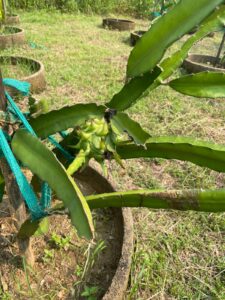
Key Morphological Features
-
Stem: Green, triangular, succulent stems with wavy margins and small spines
-
Roots: Aerial roots that help the plant climb and absorb moisture
-
Flowers: Large, white, fragrant, and night-blooming, often referred to as “Queen of the Night”
-
Fruits: Oval to oblong berries with red, pink, or yellow skin and scaly bracts
-
Pulp: White or red flesh embedded with small black edible seeds
Flowering usually begins within 12–18 months after planting, depending on management and variety.
Climate and Soil Requirements
Dragon fruit thrives best under:
-
Temperature: 20–35 °C
-
Rainfall: Low to moderate; excess moisture should be avoided
-
Sunlight: Full sunlight with partial shade in extremely hot regions
The crop prefers well-drained sandy loam soils with a pH range of 5.5–7.0. Waterlogging is highly detrimental and can cause root and stem rot.
Propagation and Planting
Dragon fruit is mainly propagated through stem cuttings, which ensures early bearing and uniform plants.
Planting System
-
Concrete or wooden trellis/pole system is commonly used
-
3–4 plants are trained around a single pole
-
Spacing: Approximately 3 m × 3 m
Proper training and pruning are essential for higher yield and easy harvesting.
Nutritional and Health Benefits
Dragon fruit is highly nutritious and increasingly promoted as a functional food.
Nutritional Highlights
-
Rich in vitamin C, antioxidants, and dietary fiber
-
Contains iron, calcium, magnesium, and phosphorus
-
Low in calories and fat
Health Benefits
-
Improves digestion
-
Enhances immunity
-
Helps regulate blood sugar
-
Supports heart health
The edible seeds are a good source of omega-3 and omega-6 fatty acids.


Economic Importance
Dragon fruit cultivation is considered a highly profitable horticultural enterprise due to:
-
Early fruiting
-
High market price
-
Long productive life (20–25 years)
-
Low water requirement
It is especially suitable for dryland farming, smallholders, and diversified farming systems. With rising consumer awareness, demand is increasing in fresh markets, hotels, and processing industries.
Pest and Disease Management
Dragon fruit is relatively pest-resistant, but common issues include:
-
Mealybugs
-
Stem rot (fungal)
-
Anthracnose
Good field sanitation, proper drainage, and timely pruning help minimize disease incidence.
Role in Sustainable Agriculture
Due to its low water requirement, drought tolerance, and high returns, dragon fruit fits well into:
-
Climate-resilient agriculture
-
Agroforestry and homestead farming
-
Organic and natural farming system
The physiology of the dragon fruit plant (Hylocereus spp.) is uniquely adapted to arid and semi-arid environments due to its crassulacean acid metabolism (CAM) photosynthetic pathway. In CAM plants, stomata open during the night to absorb carbon dioxide, which is stored as organic acids and later used for photosynthesis during the daytime when stomata remain closed. This mechanism significantly reduces water loss and enables the plant to maintain photosynthetic activity under high temperature and low moisture conditions. The succulent stems serve as the primary photosynthetic organs, storing water and assimilates, while the reduced leaves (modified into spines) minimize transpiration. Dragon fruit exhibits high water-use efficiency, moderate drought tolerance, and strong adaptability to fluctuating environmental conditions. Flowering physiology is characterized by the production of large, night-blooming flowers with intense respiration and carbohydrate mobilization, often requiring effective pollination for optimal fruit set. Overall, the physiological traits of dragon fruit make it a resilient, resource-efficient crop suitable for climate-smart horticulture.
Conclusion
The dragon fruit plant is a promising exotic fruit crop with excellent adaptability, high nutritional value, and strong economic potential. With proper agronomic practices, it can significantly enhance farmers’ income while promoting sustainable use of natural resources. As consumer demand continues to rise, dragon fruit cultivation offers a viable and future-ready option for horticultural diversification.


